
Minneapolis homeowners face a unique set of cleaning challenges that most generic guides won’t address. Between the freeze-thaw cycles that track mud and salt through entryways, the dry winter air that coats surfaces with static dust, and the short but intense pollen season, keeping a Twin Cities home clean requires more than a one-size-fits-all approach. This guide walks through the specific strategies Minneapolis residents need, from tackling seasonal grime to deciding when a DIY scrub-down makes sense and when calling in professional house cleaning services is the smarter move.
Table of Contents
ToggleKey Takeaways
- Minneapolis house cleaning requires a tailored approach due to freeze-thaw cycles, road salt residue, and seasonal weather extremes that create unique cleaning demands compared to other climates.
- Focus DIY cleaning priorities on entryways and mudrooms first, kitchens with grease buildup, bathrooms with hard water stains, and basements with moisture monitoring to stay ahead of seasonal grime.
- Hire professional house cleaning services in Minneapolis when time is limited, physical tasks become unsafe, seasonal deep cleans are overdue, or post-renovation cleanup is needed—with typical costs ranging from $120–$450 depending on home size and service type.
- Eco-friendly cleaning solutions like DIY vinegar sprays, baking soda pastes, and microfiber cloths effectively reduce indoor air pollution without sacrificing cleanliness in Minnesota homes.
- Seasonal maintenance matters: winter means entryway salt stains, spring requires pollen management, summer needs basement dehumidification, and fall is ideal for deep cleaning before the long heating season.
Why Minneapolis Homes Need a Tailored Cleaning Approach
Minneapolis isn’t just cold, it’s a city where weather extremes shape how homes age and how dirt accumulates. The average home here deals with road salt residue, ice melt tracking, and freeze-thaw moisture infiltration that homes in milder climates never see. Add in the forced-air heating systems running six months a year, and you’ve got dust circulation that demands more frequent filter changes and baseboard attention.
Minneapolis house cleaning isn’t just about aesthetics. It’s about protecting hardwood floors from salt damage, preventing mold in basements prone to spring water intrusion, and managing the particulate buildup that comes from long heating seasons. Homes with older HVAC systems or poor weatherstripping face even steeper cleaning demands.
Seasonal Cleaning Challenges in the Twin Cities
Each season brings its own mess. Winter means daily entryway cleaning, salt stains on tile, slush puddles on mats, and grit ground into grout. Homeowners should use pH-neutral cleaners on natural stone and avoid vinegar-based solutions that can etch calcium deposits. A stiff nylon brush and a wet-dry vacuum handle the heavy lifting.
Spring is all about mud and pollen. Minneapolis sees a concentrated pollen spike in late April and May, coating windowsills and porch furniture. Interior cleaning focuses on wiping down HVAC vents, washing window tracks, and vacuuming upholstered furniture with a HEPA-filter vacuum to capture allergens.
Summer is short but humid, especially during July and August. Basements can develop musty odors if not properly ventilated. Run a dehumidifier (aim for 30-50% relative humidity) and clean floor drains with a baking soda and hot water flush.
Fall means leaf debris in gutters and on decks, plus the return of heating-season dust. It’s the best time to deep-clean before the long indoor season begins.
DIY House Cleaning Strategies for Minneapolis Homeowners
A solid DIY cleaning routine can handle most of what Minneapolis weather throws at a home, if the homeowner stays ahead of it. The key is understanding which tasks are weekly maintenance and which are seasonal deep-cleans.
Room-by-Room Cleaning Priorities
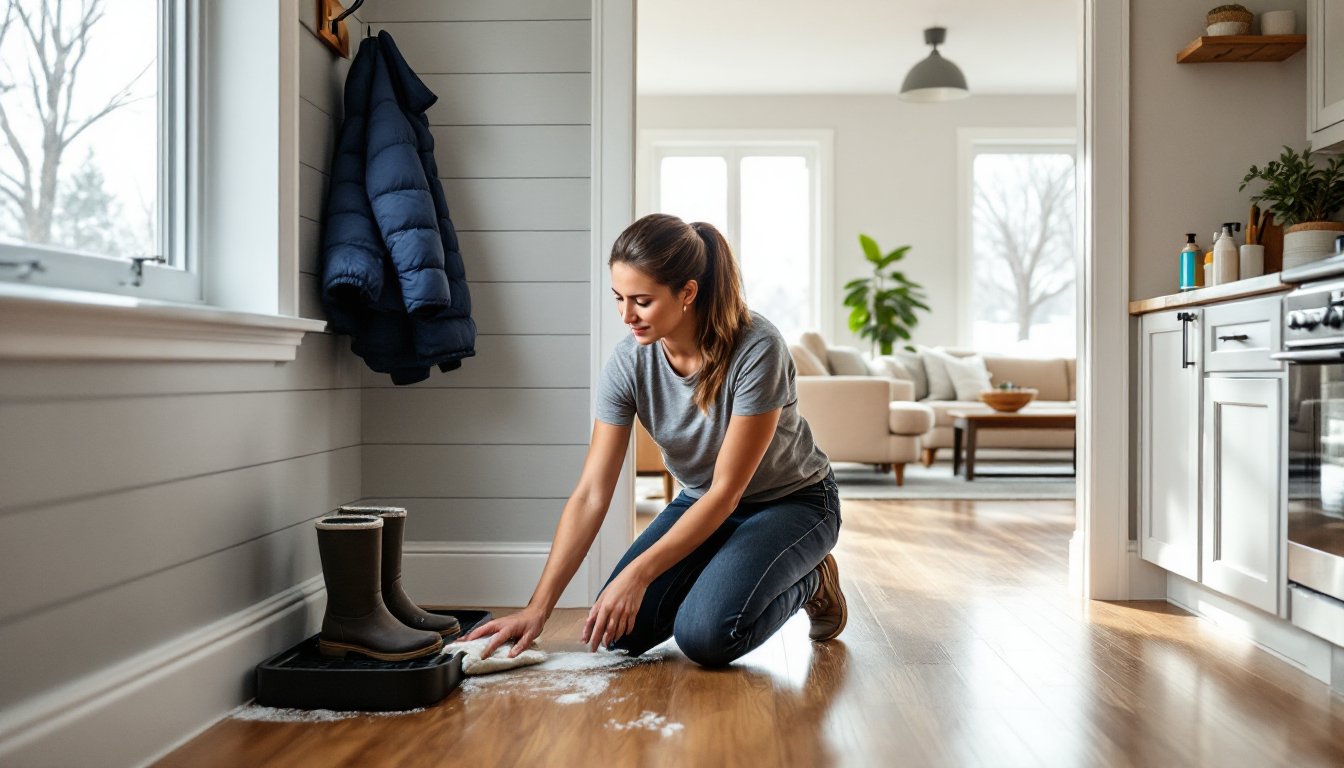
Entryways and mudrooms are ground zero. Install a boot tray with raised edges (at least 1.5 inches deep) to contain melt. Use a stiff-bristle scrub brush on textured tile or concrete to lift salt stains, followed by a mop with warm water and a few drops of dish soap. For stubborn white salt residue on natural stone, a paste of baking soda and water works without damaging the surface.
Kitchens need attention to grease buildup, especially in winter when ventilation drops. Clean range hood filters monthly by soaking them in hot water with degreasing dish soap (look for formulas with surfactants). Wipe down cabinet fronts with a microfiber cloth, grease and dust mix into a sticky film that standard dusting won’t remove.
Bathrooms in Minneapolis homes often deal with hard water staining from the city’s moderately hard water supply (around 10-12 grains per gallon in many neighborhoods). Use a citric acid-based cleaner or a 1:1 vinegar-water solution on glass shower doors and faucet aerators. Let it sit for 10 minutes before scrubbing with a non-scratch pad.
Bedrooms and living areas benefit from microfiber dusting (it captures rather than disperses particles) and weekly vacuuming with a HEPA filter, especially during heating season. Pay attention to baseboards, forced-air systems blow dust directly onto them. A damp cloth picks up more than a dry duster.
Basements need moisture monitoring. If the space smells musty, check for water intrusion around the foundation and consider a portable dehumidifier rated for the square footage. Clean sump pump pits annually and test the pump before spring thaw. Effective cleaning and organizing strategies help manage storage areas prone to dust and dampness.
When to Hire Professional House Cleaning Services in Minneapolis
There’s no shame in calling in help, especially when life gets busy or a home’s needs outpace available time. House cleaning services in Minneapolis range from basic maintenance cleans to deep-cleaning specialists who tackle post-renovation dust or move-in grime.
Consider hiring professionals if:
- Time is the limiting factor. A two-income household with kids doesn’t always have weekend hours for a thorough scrub-down.
- Physical limitations make tasks like scrubbing tile grout or cleaning high windows difficult or unsafe.
- Seasonal deep cleans are overdue. Spring cleaning after a long winter or a pre-holiday refresh often justifies the cost.
- Post-construction or renovation cleanup is needed. Drywall dust, paint overspray, and adhesive residue require specialized tools and techniques.
- Move-in or move-out situations demand a level of detail most DIYers don’t have the time or equipment to achieve.
House cleaning services Saint Paul and Minneapolis typically offer one-time deep cleans, recurring weekly or biweekly maintenance, and specialized services like carpet steam cleaning or window washing. Ask whether the service brings its own supplies (most do) and whether they’re insured and bonded. Reputable services should provide proof of general liability insurance and workers’ compensation coverage.
If a home has specific needs, pet odor removal, allergen reduction, or eco-friendly products only, confirm the service can accommodate before booking. Not all teams are equipped for specialty requests.
Cost of House Cleaning Services in Minneapolis
Pricing for professional cleaning in Minneapolis varies by home size, service type, and frequency. As of early 2026, expect the following ranges:
- Standard cleaning (recurring): $120–$200 for a 1,500–2,000 sq. ft. home. This typically includes dusting, vacuuming, mopping, bathroom scrubbing, and kitchen surface cleaning.
- Deep cleaning (one-time): $250–$450 for the same square footage. Deep cleans add baseboard scrubbing, inside appliances, window tracks, and detailed grout cleaning.
- Move-in/move-out cleaning: $300–$500, depending on the home’s condition. These are more intensive and often include inside cabinets, closets, and appliance interiors.
- Hourly rates: Some services charge $35–$60 per cleaner per hour, with a typical two-person team completing a standard clean in 2–3 hours.
Costs rise for homes over 3,000 sq. ft., homes with pets (especially if odor treatment is needed), or jobs requiring specialized equipment like steam cleaners. Many services offer discounts for recurring weekly or biweekly bookings, often 10-15% off the one-time rate.
Prices fluctuate by neighborhood. Services in Edina, Minnetonka, or St. Louis Park may charge slightly more than those serving North Minneapolis or inner-ring suburbs, though competition keeps rates fairly consistent across the metro.
Always get a written estimate that specifies square footage, number of cleaners, estimated time, and what’s included. Avoid services that quote over the phone without seeing the home or asking detailed questions.
Eco-Friendly Cleaning Solutions for Minnesota Homes
Minnesota homeowners increasingly prioritize low-toxicity cleaning products, especially in homes with kids, pets, or residents with respiratory sensitivities. Eco-friendly cleaning doesn’t mean sacrificing effectiveness, it means choosing products and methods that minimize indoor air pollution and environmental impact.
DIY green cleaners work well for most tasks:
- All-purpose spray: 1 part white vinegar, 1 part water, and a few drops of essential oil (optional, for scent). Avoid using this on natural stone or grout with calcium-based mortars.
- Glass cleaner: 2 cups water, ¼ cup rubbing alcohol, and ½ tablespoon cornstarch. Shake well and spray.
- Scouring paste: Baking soda mixed with just enough water to form a thick paste. Works on sinks, tubs, and stovetops.
- Wood polish: 1 part lemon juice, 2 parts olive oil. Buff with a soft cloth.
For store-bought options, look for products certified by EPA Safer Choice, Green Seal, or ECOLOGO. These labels indicate third-party verification of ingredient safety and environmental impact. Brands like Seventh Generation, Method, and Ecover are widely available in Twin Cities grocery and hardware stores.
Microfiber cloths are a game-changer for eco-friendly cleaning. They lift dirt and bacteria with just water, reducing the need for chemical cleaners. Wash them separately in hot water without fabric softener, which clogs the fibers.
Avoid products with ammonia, chlorine bleach, phthalates, or synthetic fragrances if indoor air quality is a concern. Homes with poor ventilation, common in older Minneapolis construction, benefit most from low-VOC products. Testing and recommendations from trusted sources like Good Housekeeping can help identify effective products.
For carpet and upholstery cleaning, consider renting a steam cleaner that uses hot water extraction rather than chemical-heavy shampoos. Most hardware stores in the Twin Cities rent units for $30–$50 per day. Using just hot water and a small amount of plant-based carpet cleaner keeps carpets fresh without residue.
Finally, proper ventilation is part of eco-friendly cleaning. Open windows during and after cleaning when outdoor temps allow, and run bathroom exhaust fans to expel moisture and airborne particles. Minneapolis air quality is generally good, making natural ventilation a viable option for much of the year. Homeowners looking for additional strategies can find practical advice on effective cleaning methods tailored to various home types.
By combining smart DIY practices, selective hiring of professionals, and eco-conscious product choices, Minneapolis homeowners can maintain clean, healthy spaces year-round without fighting against the climate, just working with it.