
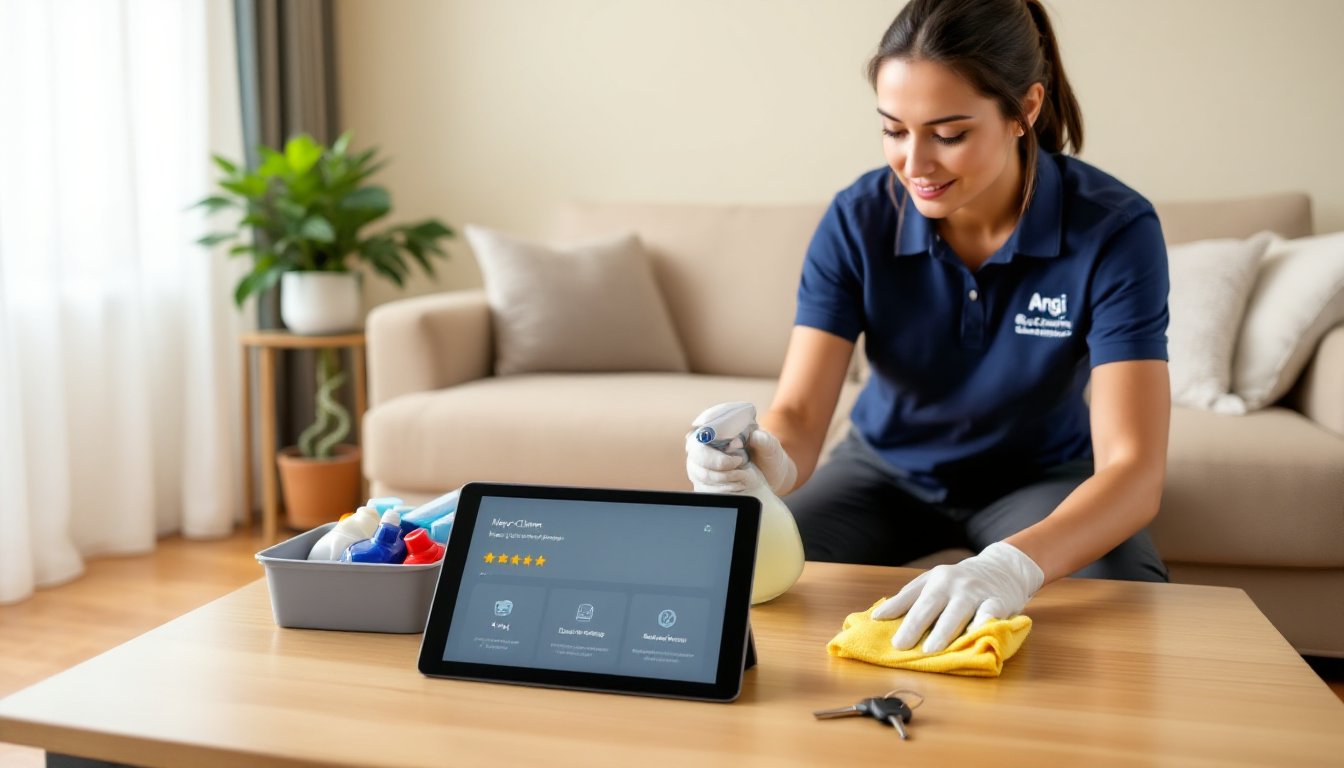
Finding reliable house cleaners isn’t like hiring someone to mow your lawn. You’re handing over keys to your home, trusting strangers with your valuables, and hoping they’ll show up on schedule. Angie’s List, now operating under the Angi brand, has been a go-to resource for homeowners vetting local service providers since 1995. The platform connects users with verified house cleaning companies and independent cleaners, backed by customer reviews and ratings. This guide walks through how to use Angi’s tools to find, vet, and hire house cleaners who’ll actually do the job right.
Table of Contents
ToggleKey Takeaways
- Angie’s List (now Angi) provides verified reviews and insurance verification for house cleaners, making it a reliable way to vet and compare local cleaning service providers in your area.
- House cleaning rates typically range from $25–$90 per hour or $100–$300 per flat-rate visit, with deep cleans costing 50–100% more than maintenance cleaning—always get pricing in writing before hiring.
- When using Angie’s List house cleaning services, create a detailed written task list, secure valuables, and request a walkthrough after the job to address any missed spots immediately.
- Beyond Angi, explore alternatives like Thumbtack, neighborhood referrals, and local Facebook groups, which may offer more competitive pricing or trusted word-of-mouth recommendations from your community.
- Always verify that house cleaners carry liability insurance and workers’ compensation coverage before hiring, and watch for red flags like large upfront payments or refusal to provide insurance proof.
- For ongoing weekly or biweekly cleaning, you may get better rates and service by hiring a trusted cleaner directly after their first Angi job, avoiding platform fees while ensuring they remain properly insured.
What Is Angie’s List and How Does It Work for House Cleaning Services?
Angie’s List rebranded to Angi in 2021 after merging with HomeAdvisor, but many homeowners still know it by its original name. The platform functions as a directory and review hub for local service providers, including house cleaning companies. Users can search for cleaners in their area, read verified customer reviews, compare pricing, and request quotes directly through the site.
Here’s how it works for house cleaning:
- Search by location and service type. Enter your ZIP code and specify “house cleaning” to see local providers.
- Read verified reviews. Angi attempts to verify reviews by confirming that reviewers actually hired the service provider through the platform or can provide proof of service.
- Request quotes. Submit details about your cleaning needs, square footage, frequency, specific tasks, and receive estimates from multiple cleaners.
- Book directly. Some cleaning companies allow instant booking through Angi’s interface, while others require follow-up phone calls or emails.
Angi doesn’t employ the cleaners. It’s a marketplace connecting homeowners with independent contractors and cleaning businesses. The platform makes money through membership fees (for homeowners seeking premium features) and advertising fees (paid by service providers to boost visibility).
One key difference from DIY home improvement: you’re not buying materials or following step-by-step instructions. You’re outsourcing labor. That means vetting credentials, insurance, and work history matters more than tool selection.
How to Find and Hire House Cleaners Through Angi’s List
The process of hiring cleaners through Angi requires more than clicking the first name on the list. Follow these steps to avoid hiring someone who’ll no-show or damage your property.
- Create a free account. Basic search and quote requests don’t require a paid membership, but premium features (like access to discounts and priority customer support) cost around $10–$60 annually depending on the plan.
- Submit a detailed service request. Specify square footage, number of rooms, type of cleaning (deep clean vs. maintenance), and any special requirements (pet-friendly products, green cleaning solutions, move-in/move-out services).
- Review multiple quotes. Aim for at least three estimates. Compare not just price, but scope of work. Does the quote include baseboards? Window sills? Refrigerator interiors?
- Check credentials. Verify that cleaners carry general liability insurance and, if they have employees, workers’ compensation insurance. If a cleaner gets injured in your home and they’re uninsured, you could be liable.
- Schedule a walkthrough. Reputable cleaners will offer an in-home estimate for larger or complex jobs. This also lets you gauge professionalism and communication.
Search Filters and Ratings
Angi’s search interface includes filters that help narrow results:
- Certification and background checks. Some cleaners undergo third-party background screenings. This isn’t a guarantee of quality, but it’s a baseline for trust.
- Years in business. A company operating for five-plus years is more likely to have established processes and accountability.
- Star ratings and review count. A 4.8-star average with 200 reviews is more reliable than a 5.0-star average with three reviews. Look for patterns in complaints, late arrivals, missed tasks, or aggressive upselling.
- Response time. Angi tracks how quickly providers reply to quote requests. Slow responses often correlate with poor project management.
Don’t rely solely on the highest-rated cleaner. Read the one- and two-star reviews to understand failure modes. If multiple customers mention the same issue, like cleaners skipping corners or using harsh chemicals, take it seriously.
What to Expect: Pricing and Service Options for House Cleaning
House cleaning rates vary wildly by region, home size, and service scope. Here’s what to expect based on 2026 market rates:
Pricing models:
- Hourly rates: $25–$90 per hour per cleaner. Independent contractors typically charge less: established companies charge more but often include insurance and quality guarantees.
- Flat rate per visit: $100–$300 for a standard home (1,200–2,000 sq ft). Deep cleans cost 50–100% more than maintenance cleans.
- Square footage pricing: $0.08–$0.20 per square foot for routine cleaning: $0.15–$0.40 for deep cleaning.
Common service tiers:
- Basic cleaning: Dusting, vacuuming, mopping, bathroom and kitchen surfaces. Excludes baseboards, inside appliances, or windows.
- Deep cleaning: Everything in basic cleaning, plus baseboards, light fixtures, inside ovens/fridges, window tracks, and detailed scrubbing of grout and tile.
- Move-in/move-out cleaning: Intensive cleaning of an empty home, often including inside cabinets, closets, and all appliances.
- Specialty add-ons: Carpet shampooing, upholstery cleaning, garage sweeps, or post-construction cleanup.
Most companies require a higher rate for the first visit (often a deep clean) and lower rates for recurring maintenance (weekly, biweekly, or monthly). Subscription-style plans through local house cleaners can reduce per-visit costs by 10–20%.
Hidden costs to watch for:
- Travel fees if you’re outside the cleaner’s primary service area.
- Supply fees if you don’t provide cleaning products and tools.
- Cancellation fees if you cancel within 24–48 hours of a scheduled appointment.
Always get pricing in writing before work begins. Verbal estimates aren’t enforceable and lead to disputes.
Pros and Cons of Using Angi’s List for House Cleaning
Angi offers real advantages, but it’s not a perfect solution for every homeowner.
Pros:
- Verified reviews. Unlike Google or Yelp, Angi attempts to confirm that reviewers actually used the service. This reduces fake or incentivized reviews.
- Insurance verification. Angi requires service providers to submit proof of liability insurance, though enforcement varies.
- Easy quote comparison. Submit one request and receive multiple estimates without calling around.
- Dispute resolution. Angi offers a complaint resolution process if a cleaner damages property or fails to deliver agreed-upon services.
Cons:
- Not all cleaners are on the platform. Many reputable local cleaners operate through word-of-mouth or their own websites and don’t pay for Angi visibility.
- Premium membership upsell. Free users see ads and may have limited access to discounts or priority support.
- Variable quality. A high Angi rating doesn’t guarantee the cleaner will meet your standards. Reviews reflect other customers’ expectations, which may differ from yours.
- Response variability. Some cleaners reply within hours: others take days or never respond. You’re still dependent on the professionalism of individual contractors.
If you’re hiring for a one-time deep clean before a party or open house, Angi works well. For ongoing weekly or biweekly service, you might get better results (and pricing) by finding a cleaner through neighborhood referrals and negotiating directly.
Tips for Maximizing Your Experience with Angi’s List Cleaners
Getting the best results from an Angi-sourced cleaner requires clear communication and a few practical safeguards.
Before the first visit:
- Create a written task list. Specify what you want cleaned, what can be skipped, and any off-limits areas. Include details like “clean inside microwave” or “dust ceiling fan blades.” Assumptions lead to disappointment.
- Secure valuables. Lock up jewelry, cash, prescription medications, and important documents. Even honest cleaners can be accused of theft if something goes missing.
- Test a small area first. If a cleaner uses unfamiliar products, ask them to test on an inconspicuous spot, especially on natural stone countertops, hardwood floors, or antique furniture. Harsh chemicals can cause permanent damage.
- Discuss pets and children. If you have dogs, cats, or young kids at home during cleaning, communicate that upfront. Some cleaners charge extra or decline jobs with pets.
During and after the visit:
- Do a walkthrough. If you’re home when the cleaner finishes, walk through each room together. It’s easier to address missed spots immediately than to call back later.
- Leave a review. Honest feedback, positive or negative, helps other homeowners and holds cleaners accountable. Be specific: “Missed baseboards in the guest bedroom” is more useful than “Not thorough.”
- Tip for good work. If you’re satisfied, a 15–20% tip is standard for house cleaners. Cash is preferred.
Red flags to watch for:
- Requests for large upfront payments. Reputable cleaners charge after work is completed or require a small deposit (10–20%).
- No written contract or estimate. Even a simple email confirming scope, price, and schedule protects both parties.
- Refusal to provide proof of insurance. If a cleaner won’t show you their liability insurance certificate, walk away.
Alternatives to Angi’s List for Finding House Cleaning Services
Angi isn’t the only option. Depending on your priorities, cost, flexibility, or convenience, consider these alternatives:
Other online platforms:
- HomeAdvisor (now merged with Angi but still operates separately for some users). Similar model: request quotes, read reviews, compare cleaners.
- Thumbtack. Lets homeowners post job descriptions and receive bids from local cleaners. Pricing tends to be more competitive since cleaners actively bid for work.
- TaskRabbit. Best for one-time or occasional cleaning tasks. Cleaners set their own rates, and you can review profiles before hiring.
- Handy and MaidPro. National chains that franchise local cleaners. More standardized service, but less flexibility than independent contractors.
Offline options:
- Neighborhood referrals. Ask neighbors, coworkers, or friends who they use. Word-of-mouth is still the most reliable vetting method.
- Local Facebook groups. Many communities have “recommended services” groups where residents share trusted cleaners.
- Good Housekeeping or similar publications. They occasionally publish tested lists of cleaning services and product recommendations for homeowners researching options.
When to hire directly:
If you find a cleaner you trust, consider hiring them off-platform after the first job. You’ll avoid platform fees (which cleaners often pass on to customers), and you can negotiate better rates for recurring service. Just make sure the cleaner is properly insured, don’t rely on Angi’s verification once you’re working outside the platform.
DIY vs. hiring out:
For budget-conscious homeowners, DIY cleaning with the right tools, HEPA-filter vacuums, microfiber cloths, and pH-neutral cleaners, can achieve professional-level results. But if you’re juggling a full-time job, home improvement projects, or family obligations, outsourcing cleaning frees up time for higher-value tasks. It’s not a luxury: it’s a trade-off. Just like hiring an electrician for a panel upgrade instead of risking a code violation, hiring a cleaner lets you focus on what you do best.