
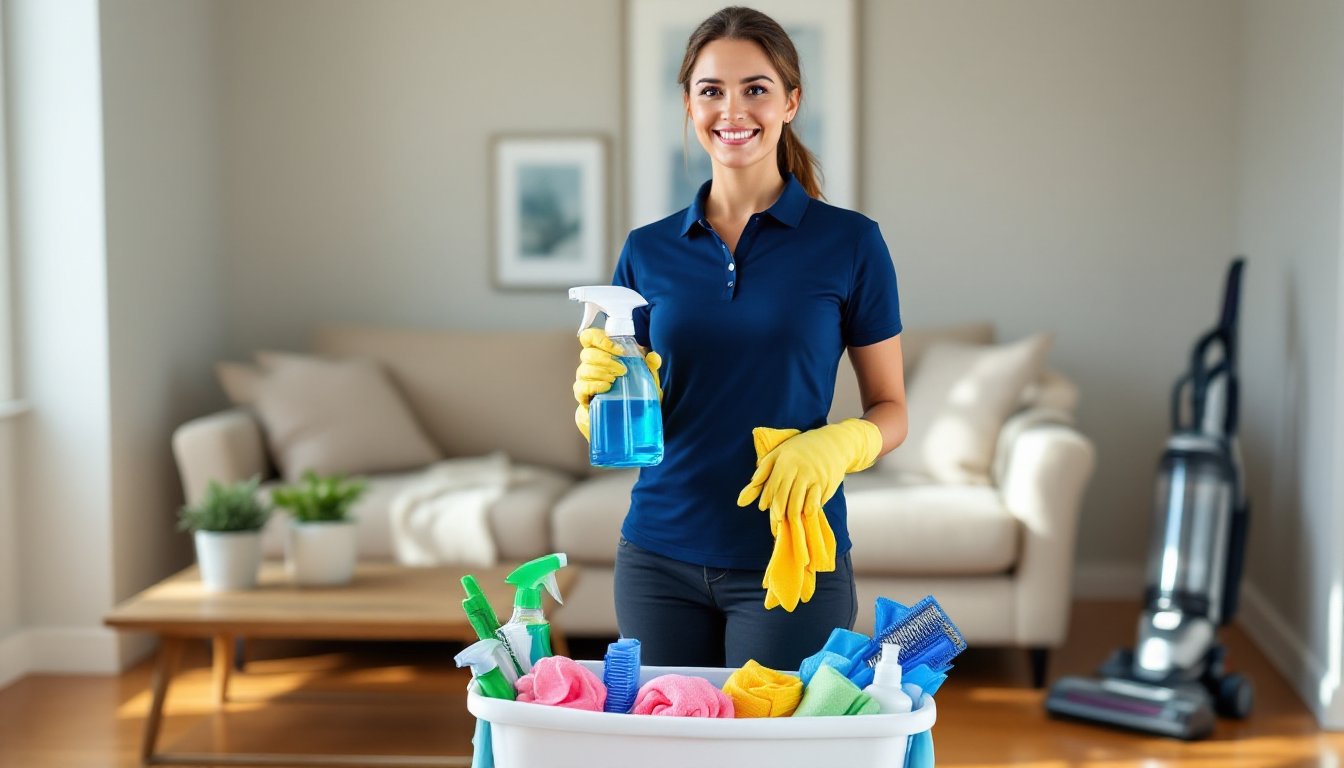
Starting a house cleaning business doesn’t require a storefront, expensive equipment, or a four-year degree. It’s one of the most accessible service businesses someone can launch, low overhead, flexible scheduling, and steady demand from homeowners who’d rather spend their weekends doing anything but scrubbing grout. The residential cleaning industry continues to grow as dual-income households and busy professionals prioritize outsourcing household tasks. With the right foundation, legal structure, insurance, pricing strategy, and a plan to land those first few clients, a cleaning business can go from side hustle to full-time income faster than most trades.
Table of Contents
ToggleKey Takeaways
- Starting a house cleaning business requires minimal upfront investment—just $200–$500 in supplies and equipment—making it one of the most accessible service businesses to launch.
- Choose a legal structure (sole proprietorship or LLC), register your business name, obtain an EIN, and secure general liability and bonding insurance to protect your assets and credibility.
- Price your services strategically using hourly rates ($25–$50), flat rates per job ($120–$180 for standard home cleans), or square footage pricing ($0.10–$0.25 per square foot), and add premium services like oven cleaning to boost revenue.
- Build your client base through word-of-mouth referrals, a free Google Business Profile, local Facebook groups, and strategic door-to-door marketing rather than expensive paid advertising platforms.
- The house cleaning business model offers recession-resistant, recurring revenue with built-in scalability—solo cleaners can grow by hiring subcontractors as demand increases.
- Deliver consistent, reliable work and ask satisfied clients for reviews and referrals; the cleaning industry rewards quality service and customer satisfaction over aggressive pricing tactics.
Why Starting a House Cleaning Business Makes Sense
The barrier to entry is remarkably low compared to other service trades. There’s no need for a commercial lease, a box truck, or specialized certifications to get started. Most cleaners begin with supplies that fit in a caddy and a car trunk, scheduling jobs around existing commitments.
Demand is consistent and recession-resistant. People always need clean homes, whether they’re preparing for guests, managing health issues, or simply reclaiming time. Unlike remodeling or landscaping projects that depend on discretionary income and good weather, cleaning services generate repeat business year-round.
Scalability is built into the model. A solo cleaner can start with a handful of regular clients and expand by hiring employees or subcontractors as the schedule fills. Recurring weekly or biweekly appointments create predictable revenue, making it easier to manage cash flow and plan growth. Many professionals offering home service solutions report that residential cleaning ranks among the most requested categories.
The skills are learnable, not innate. Efficient cleaning is about systems, product knowledge, and attention to detail, all things that improve with repetition. No one’s born knowing the best way to clean baseboards or streak-free windows, but a few weeks of focused work will build competence and speed.
Essential Steps to Launch Your Cleaning Business
Register Your Business and Obtain Licenses
Choose a business structure before accepting the first dollar. A sole proprietorship is the simplest option, no formal filing in most states, though it offers no liability protection. An LLC (limited liability company) costs more upfront (typically $50–$500 depending on the state) but shields personal assets if a client claims property damage or injury.
Register the business name with the county clerk or secretary of state if operating under a name other than a personal legal name (a “DBA” or “doing business as” filing). This usually runs $10–$50 and takes a few days to process.
Check local requirements for business licenses and permits. Some cities require a general business license, others don’t regulate residential cleaners at all. Call the city clerk’s office or check the municipal website. If using any chemicals classified as hazardous (rare in residential work, more common in commercial), additional permits may apply.
Obtain an Employer Identification Number (EIN) from the IRS, even for a solo operation. It’s free, takes ten minutes online, and allows opening a business bank account without using a Social Security number. Keep business and personal finances separate from day one, it simplifies tax filing and protects that LLC liability shield.
Get Insured and Bonded for Protection
General liability insurance is non-negotiable. It covers property damage (a broken vase, a scratched hardwood floor) and bodily injury (a client trips over a vacuum cord). Policies typically start around $400–$600 annually for a solo cleaner with under $50,000 in revenue. Many carriers offer monthly payment plans.
Bonding isn’t insurance, it’s a guarantee that compensates a client if the cleaner steals or damages property. Surety bonds cost $100–$300 per year and boost credibility, especially when marketing to higher-end clients or property managers who require proof of bonding.
If hiring employees (not just subcontractors), workers’ compensation insurance becomes mandatory in most states. Rates vary by state and payroll size, often running 2–5% of total wages for cleaning businesses. Skipping workers’ comp is a fast way to face fines or lawsuits.
Some cleaners add commercial auto insurance if using a personal vehicle for business purposes. Personal auto policies often exclude coverage during commercial use, leaving a gap if an accident happens en route to a job.
Equipment, Supplies, and Pricing Your Services
Start-up costs for equipment and supplies typically run $200–$500. A basic kit includes:
- Vacuum cleaner (upright or canister with attachments for stairs and upholstery)
- Microfiber cloths (at least a dozen: they’re reusable and won’t scratch surfaces)
- Mop and bucket (or a spray mop system for faster floor work)
- All-purpose cleaner, glass cleaner, bathroom disinfectant, and floor cleaner
- Scrub brushes, sponges, and a tile grout brush
- Caddy or tote to carry supplies between rooms
- Extension pole for dusting ceiling fans and high corners
- Gloves and safety goggles (especially when handling acidic or alkaline cleaners)
Many cleaners supply their own products to control quality and avoid conflicts with client preferences (some want eco-friendly or fragrance-free products). Others ask clients to provide supplies, which cuts costs but limits control over results.
Pricing models vary by market and service type. Common approaches include:
- Hourly rates: $25–$50 per hour for solo cleaners, higher in urban markets or for specialized work (move-out cleans, post-construction).
- Flat rates per job: Based on home size and scope. A typical 1,500-square-foot, three-bedroom home might cost $120–$180 for a standard clean. Deep cleans (inside cabinets, baseboards, window tracks) often run 50–100% more.
- Square footage pricing: $0.10–$0.25 per square foot, adjusted for clutter, pets, or extras like interior windows.
Factor in drive time, supply costs, and the reality that a “two-hour clean” often takes 2.5 hours when accounting for setup and walk-throughs. Underpricing to win clients leads to burnout and resentment. Platforms offering project cost guides can help benchmark local rates, but direct conversations with other service providers (plumbers, handymen, landscapers) offer real-world insight into what the market supports.
Offer add-ons to increase per-job revenue: interior oven cleaning, refrigerator interiors, inside windows, or laundry folding. These extras often take 15–30 minutes but can add $15–$40 to the invoice.
Marketing Strategies to Attract Your First Clients
The first five clients come from people who already know and trust the cleaner. Reach out to friends, family, neighbors, and former coworkers with a simple offer: a discounted first clean in exchange for a review and referral. Word-of-mouth referrals remain the top source of new business for small cleaning companies.
Create a Google Business Profile (formerly Google My Business). It’s free, takes fifteen minutes, and puts the business on Google Maps and local search results. Upload photos of cleaning results (with client permission), respond to reviews, and keep hours and contact info current. Local SEO matters, most people searching “house cleaner near me” won’t scroll past the first page.
Join local Facebook groups focused on neighborhoods, parenting, or buy/sell/trade communities. Many allow service providers to post offerings once a week. Keep posts short and specific: “Taking on two new weekly clients in the Riverside area, first clean 20% off” works better than “Professional cleaning services available.”
Invest in simple business cards and door hangers. Leave cards at coffee shops, community centers, and real estate offices (agents often need cleaners for listings). Door hangers work well in neighborhoods where the cleaner already has a client, neighbors see the truck, see the results, and may inquire.
Consider listing on platforms like Thumbtack, Yelp, or Nextdoor, but read the fine print. Some charge per lead (whether it converts or not), and competition can drive prices up. Many resources that connect homeowners with renovation and service professionals also feature cleaning services, but evaluate the cost per acquisition before committing.
Ask every satisfied client for a review on Google or Facebook. Send a follow-up text or email within 24 hours of the job: “Thanks for trusting me with your home. If you’re happy with the results, I’d appreciate a quick review.” Make it easy by including a direct link.
Referral incentives drive growth. Offer existing clients $20 off their next clean for every new client they refer who books a recurring service. The cost of the discount is lower than paying for leads through advertising.
Conclusion
Launching a house cleaning business doesn’t require a hefty investment or years of training, just a willingness to show up, do thorough work, and treat clients’ homes with respect. Focus on the fundamentals: legal structure, insurance, fair pricing, and a steady pipeline of referrals. The cleaning industry rewards reliability and consistency more than flashy marketing or rock-bottom prices. Start small, deliver results, and let satisfied customers do the talking.