
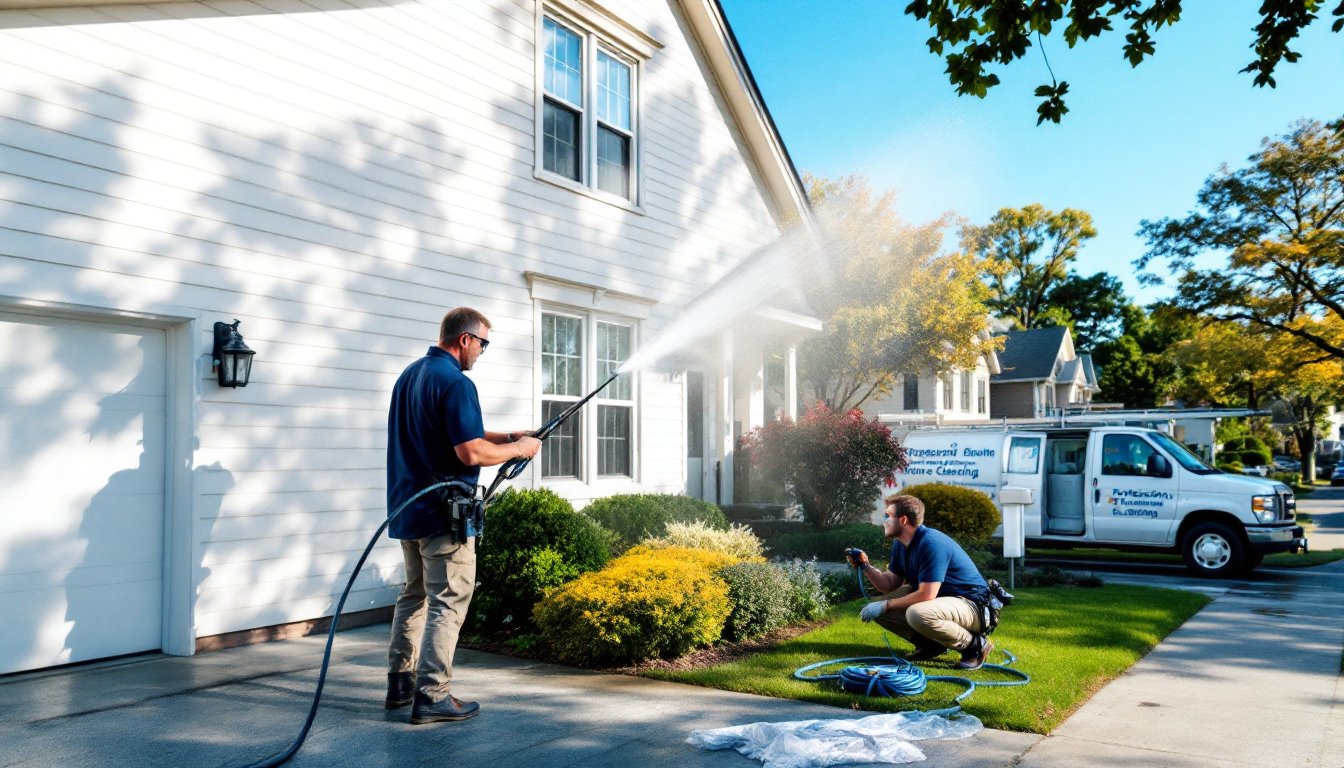
Your home’s exterior takes a beating. Rain, pollen, mildew, road grime, and UV exposure dull siding, stain driveways, and coat windows in a film that no amount of interior scrubbing can fix. While a pressure washer rental and a Saturday morning might sound appealing, there’s a reason professional exterior cleaning services exist, and why homeowners increasingly rely on them. This guide walks through what to look for when searching locally, how to compare quotes without getting burned, and when it’s smarter to hire out versus tackle the job yourself. Whether you’re prepping for a sale, restoring curb appeal, or just tired of looking at streaky vinyl, here’s what you need to know.
Table of Contents
ToggleKey Takeaways
- Professional exterior house cleaning near you prevents costly damage from algae, mildew, and gutter clogs while adding 5–10% to perceived home value.
- When evaluating exterior cleaning services, verify licensing, insurance, and experience with your specific siding type to avoid damage from improper pressure settings.
- Pressure washing suits concrete and brick, but soft washing is required for vinyl, wood, roofs, and stucco to prevent material degradation.
- Get at least three written quotes with itemized services, clarify what’s included (gutters, windows, driveways), and check detergent safety before hiring.
- Hire professionals for two-story homes, delicate materials, or heavy organic growth; DIY is only practical for single-story ranch homes with vinyl siding and basic cleaning needs.
- Ask contractors about liability coverage, PSI nozzle selection, plant protection, and request local references to ensure quality work and avoid costly mistakes.
Why Professional Exterior House Cleaning Matters
Dirt accumulation isn’t just cosmetic. Algae, mildew, and lichen can break down siding materials over time, especially on wood, composite, and stucco. Gutter clogs from debris lead to water damage and foundation issues. Oxidized paint chalks and fades faster when contaminants aren’t removed.
Professional cleaners use the right pressure settings and detergents for each surface. Vinyl siding tolerates around 1,500–2,000 PSI, while wood shingles need closer to 500 PSI with a wide-angle tip to avoid splintering. Improper technique, blasting windows at close range or forcing water under siding, causes more damage than the dirt ever would.
Beyond preservation, there’s resale value. A clean exterior can add 5–10% to perceived home value during showings, and it’s one of the simplest ways to boost curb appeal before listing. Even if you’re not selling, regular cleaning extends the life of paint, caulk, and sealant, saving money on premature repainting or siding replacement.
What to Look for When Searching for Local Exterior Cleaning Services
Start with insurance and licensing. Reputable companies carry general liability and workers’ compensation. If someone falls off a ladder or damages your landscaping, you want their insurer handling it, not yours.
Experience with your siding type is critical. A crew that specializes in brick may not know how to handle fiber cement or EIFS (synthetic stucco). Ask how long they’ve been operating locally, longevity suggests they haven’t left a trail of damaged homes.
Check online reviews on multiple platforms. Finding local cleaners with verified reviews helps filter out fly-by-night operators. Look for patterns: repeated mentions of punctuality, thorough prep work, or respectful crews matter more than a single glowing review.
Equipment quality is another tell. Pros own commercial-grade pressure washers with adjustable PSI, surface cleaners for driveways (those round spinning attachments that prevent striping), and soft-wash rigs for roofs. If a quote mentions only a single machine and a garden hose, keep looking.
How to Compare Quotes and Service Packages
Get at least three written estimates. Verbal quotes mean nothing when results don’t match expectations. Each estimate should itemize what’s included: siding, windows, gutters, driveway, deck, and any add-ons.
Watch for vague line items like “full exterior clean.” Does that include second-story windows? Downspout flushing? Deck railings? Clarify before signing. Some companies charge per square foot of siding (common range: $0.30–$0.70/sq ft depending on material and region), while others quote flat rates for typical home sizes.
Payment terms vary. Half upfront is reasonable for large jobs: full payment before work starts is a red flag. Check if the quote includes prep (covering outlets, taping off fixtures) and cleanup. You shouldn’t be rinsing landscaping or sweeping the driveway after they leave.
Compare apples to apples. The lowest bid might exclude gutter cleaning or use harsh chemicals that strip wax from painted trim. The highest bid might include treatments that aren’t necessary for your home. Ask what detergents they use, biodegradable, non-corrosive options are standard for quality outfits.
Types of Exterior Cleaning Services Available in Your Area
Pressure Washing vs. Soft Washing
Pressure washing uses high PSI to blast away dirt. It’s effective for concrete, brick, and some hardy sidings, but overkill for vinyl, wood, or painted surfaces. Soft washing applies low-pressure detergent solutions that sit and break down organic growth, then rinse clean. Roofs, stucco, and aged wood almost always require soft washing to avoid damage.
Specialized Services
- Roof cleaning: Removes algae streaks (those black stains are Gloeocapsa magma, a cyanobacterium). Zinc or copper treatments help prevent regrowth. Never pressure wash asphalt shingles, it strips granules and voids warranties.
- Gutter cleaning and brightening: Flushing debris is one thing: restoring oxidized aluminum to its original white is another. Some crews offer brightening as an add-on.
- Deck and fence restoration: Cleaning is step one: many companies also offer staining or sealing. A freshly cleaned deck that’s left unsealed will gray and splinter within months.
- Window cleaning: Interior and exterior, including screens and tracks. Often bundled at a discount with siding jobs.
Some outfits specialize in home improvement cost planning and can bundle exterior cleaning with gutter repair or minor carpentry. If your fascia boards are rotting or caulk around windows is shot, ask if they offer those repairs or can refer a trusted contractor.
Questions to Ask Before Hiring an Exterior Cleaning Company
- “What PSI and nozzle will you use on my siding?” Correct answer depends on material. Evasive answers are a warning sign.
- “Do you carry liability and workers’ comp insurance?” Ask for proof. Call the insurer to verify coverage is active.
- “Will you cover plants and outdoor fixtures?” Detergents can harm landscaping: pros tarp or pre-soak plants.
- “How do you handle second-story work?” Ladders, scaffolding, or extension wands? Some homes require lift rentals for safety, that affects cost.
- “What’s your plan if damage occurs?” A solid answer includes immediate stoppage, documentation, and insurance claim filing.
- “Do you use subcontractors?” Not a dealbreaker, but you want to know who’s actually on-site.
- “Can you provide local references?” Recent jobs in your ZIP code prove they’re familiar with regional issues (hard water stains, specific pollen types, local building materials).
Don’t skip the reference check. A five-minute call to a past customer reveals whether the crew showed up on time, stayed within budget, and left the property cleaner than they found it.
DIY vs. Professional Exterior House Cleaning: Making the Right Choice
Renting a pressure washer runs $50–$100/day from big-box stores, plus detergent and safety gear. For a single-story ranch with vinyl siding and minimal landscaping, that’s manageable if you’re comfortable on ladders and understand nozzle selection. A 0-degree red tip can punch through siding: stick with 25- or 40-degree tips for most surfaces.
But DIY has limits. Two-story homes require extension wands or scaffolding, both increase injury risk. Roofs are outright dangerous without proper fall protection and product knowledge. One wrong move with a pressure washer can drive water under shingles, flood attics, or crack mortar.
When to DIY:
- Single-story home
- Common siding (vinyl, painted wood)
- No major mildew or algae issues
- You own or can afford to rent the right equipment
- You’ve researched technique (plenty of cleaning guides and safety tips exist)
When to hire out:
- Two-story or complex rooflines
- Delicate materials (stucco, historic brick, cedar shakes)
- Heavy organic growth requiring chemical treatment
- Time constraints (pros finish in hours what takes a homeowner a weekend)
- Physical limitations or fear of heights
Pros also carry $1–2 million in liability coverage. If you damage your neighbor’s car with overspray or fall off a ladder, your homeowner’s policy might not cover it. Weigh the $300–$800 professional cost against a potential ER visit or insurance claim.
Conclusion
Finding the right exterior cleaning service comes down to assignments: verifying credentials, comparing detailed quotes, and asking the uncomfortable questions before work starts. Whether you’re tackling a DIY clean on a straightforward home or hiring pros for a multi-story job with tricky materials, understanding the process keeps you from overpaying or dealing with shoddy results. A clean exterior isn’t just about looks, it’s maintenance that protects your investment and saves you from costlier repairs down the line.