
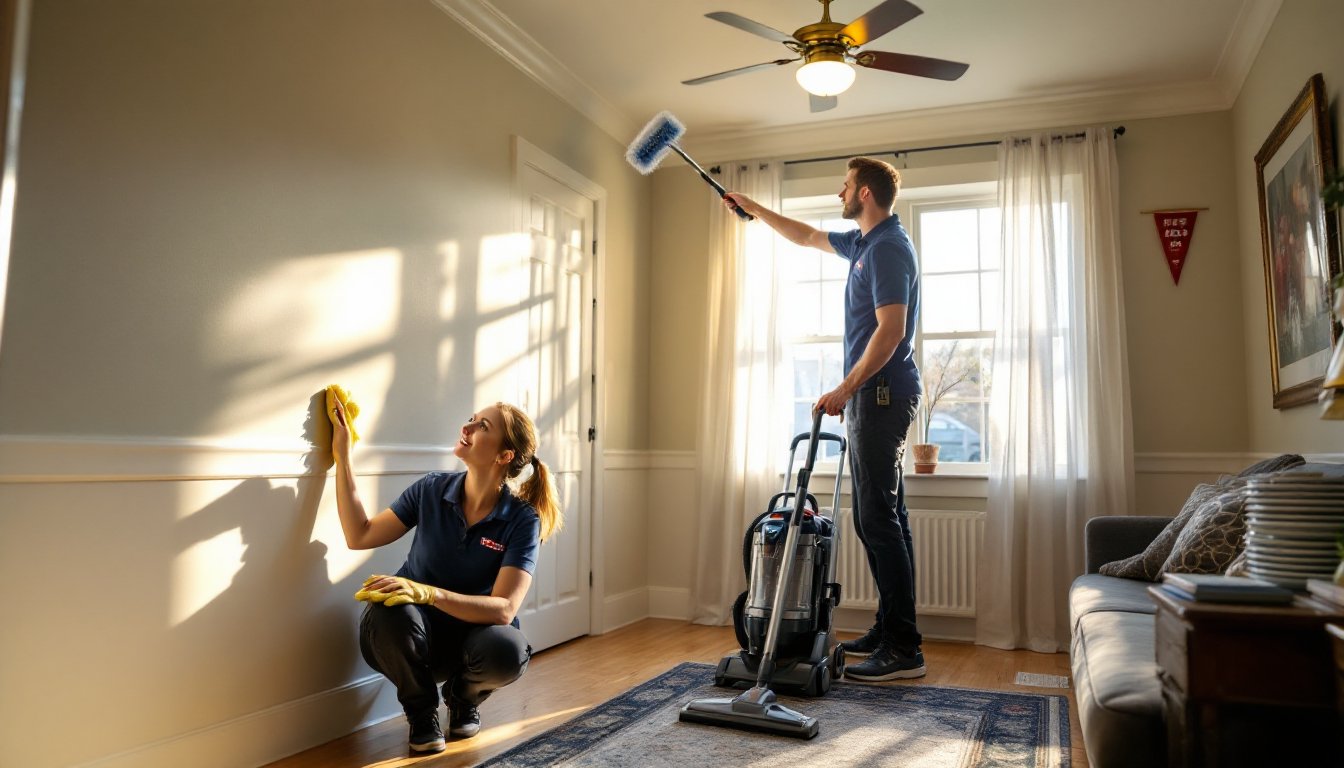
Cincinnati homeowners face a unique challenge: keeping homes spotless while juggling work, family, and the unpredictable Ohio weather that tracks mud, pollen, and grime through every doorway. Whether you’re weighing the cost of hiring help or rolling up your sleeves for a DIY deep clean, understanding your options makes all the difference. This guide breaks down what professional house cleaning service Cincinnati providers offer, what you’ll pay, and how to tackle the job yourself when a pro isn’t in the budget.
Table of Contents
ToggleKey Takeaways
- Professional house cleaning service Cincinnati providers save 1–3 hours per clean and ensure consistent quality through checklist-based systems, especially valuable for older homes with hard-to-reach dust traps.
- House cleaning in Cincinnati averages $120–$200 for standard service on 1,500–2,000 sq ft homes, with deep cleans running $200–$350 and recurring discounts of 10–20% for weekly or biweekly bookings.
- Verify insurance, bonding, and employee training before hiring; test with a one-time service to evaluate quality and crew compatibility without long-term commitment.
- Cincinnati’s weather and older housing stock demand seasonal attention: change HVAC filters monthly during spring pollen season, manage basement humidity below 50% in summer, and use vinegar solutions to combat winter road salt residue.
- DIY cleaners should invest in HEPA-filtered vacuums, microfiber cloths, and follow top-to-bottom room-by-room checklists; natural solutions like vinegar-water and baking soda paste handle most surfaces cost-effectively.
Why Professional House Cleaning Services Are Worth It in Cincinnati
Time is the biggest trade-off. A thorough whole-home clean takes 3–5 hours for most Cincinnati houses, and that’s assuming you’ve got the right tools and products on hand. Professionals cut that time to 1.5–2.5 hours with a trained crew, freeing up weekends for backyard projects or catching a Reds game.
Consistency matters, too. Reputable services follow checklist-based systems, baseboards, ceiling fans, behind appliances, so nothing gets skipped the way it might when you’re cleaning around a busy schedule. For homes with pets, kids, or allergy sufferers, that consistency translates to better air quality and fewer dust mites.
Cincinnati’s housing stock leans older, with plenty of pre-war bungalows and mid-century ranches. Older homes collect dust in places modern builds don’t: plaster cracks, wood trim gaps, radiator fins. Professional cleaners know these trouble spots and bring the gear, HEPA vacuums, microfiber mops, extendable dusters, to handle them properly.
Finally, there’s the liability angle. If you’re preparing to list a home or managing a rental property, professional cleaning provides documentation and accountability. Most services carry bonding and insurance, which matters if something breaks or goes missing during the job.
What to Expect from Cincinnati House Cleaning Companies
Most Cincinnati house cleaning service providers offer tiered packages: standard maintenance cleaning, deep cleaning, and specialty services like move-in/move-out or post-construction cleanup. Initial consultations typically include a walkthrough, either in person or via video call, where they’ll assess square footage, number of bathrooms, pet hair levels, and any special requests.
Standard service usually covers surface cleaning: dusting flat surfaces, vacuuming and mopping floors, wiping down counters and sinks, cleaning mirrors, and emptying trash. Bathrooms get scrubbed (tubs, toilets, tile), and kitchens get degreased (stovetops, appliance exteriors, backsplashes). Bed-making and dish-washing are often optional add-ons.
Team size varies. Solo operators or two-person crews are common for homes under 2,000 square feet. Larger properties or deep cleans might bring three or four cleaners to knock out the job in one visit. Expect them to arrive with their own supplies and equipment, though some companies offer green cleaning or hypoallergenic product options if requested in advance.
Scheduling flexibility depends on the company. Larger outfits offer online booking and recurring plans (weekly, biweekly, monthly). Smaller independents may require phone calls and book out 1–2 weeks during peak seasons, spring and fall, when homeowners ramp up cleaning routines.
Standard Cleaning vs. Deep Cleaning Services
Standard cleaning maintains already-clean homes. It’s surface-level work: vacuum, mop, wipe, dust. Frequency is usually every 1–4 weeks depending on household traffic. This service won’t address built-up grime, cobwebs in high corners, or appliance interiors.
Deep cleaning is the reset button. It includes everything in a standard clean plus baseboards, ceiling fans, light fixtures, inside ovens and refrigerators, grout scrubbing, and window tracks. Plan on this service twice a year minimum, or before major events and seasonal transitions. Deep cleans take 50–75% longer and cost proportionally more.
Some Cincinnati providers also offer rotating deep-clean schedules: they’ll hit one or two extra zones each visit (this week it’s the kitchen appliances, next time it’s bedroom closets) so you’re not paying for a full deep clean every month but still catching neglected areas over time.
How to Choose the Right House Cleaning Service in Cincinnati
Start by verifying insurance and bonding. Any legitimate service should carry general liability and workers’ comp. Ask for proof, don’t just take their word. This protects you if a cleaner is injured on your property or if something gets damaged.
Check references and online reviews, but dig past the star ratings. Look for specifics: do reviewers mention reliability, thoroughness, communication? Red flags include pattern complaints about missed areas, no-shows, or high turnover (you want consistent crews who learn your home’s quirks).
Ask about employee vs. contractor models. Companies that hire W-2 employees typically provide more training and oversight than those using independent contractors. This often translates to better consistency, though it may cost slightly more.
Get clarity on what’s included before signing anything. Does “standard cleaning” include inside the microwave or just the exterior? Are ceiling fans extra? What about pet hair removal from upholstery? Many home organization tips emphasize setting clear expectations upfront to avoid surprise charges.
Inquire about cleaning products. If anyone in your household has asthma, allergies, or chemical sensitivities, ask if they offer fragrance-free or plant-based options. Some services bring HEPA-filtered vacuums as standard: others charge extra.
Finally, test with a one-time deep clean before committing to a recurring contract. This lets you evaluate their work quality and crew compatibility without a long-term obligation. If they’re resistant to a trial run, that’s a warning sign.
Average House Cleaning Costs in Cincinnati
As of 2026, Cincinnati house cleaning rates fall in the $120–$200 range for a standard clean of a 1,500–2,000 square foot home. Rates scale up for larger properties: add $0.07–$0.12 per additional square foot, or $25–$40 per extra bathroom.
Deep cleaning runs $200–$350 for the same footprint, with heavy add-ons like interior window washing, carpet shampooing, or post-renovation dust removal pushing costs higher. Move-in/move-out cleans typically match deep-clean pricing, sometimes with a premium if the property is vacant and utilities are off (harder to clean without water or good lighting).
Hourly rates for independent cleaners hover around $30–$50 per hour per person. A two-person crew charging $40/hour each costs $80/hour total, and they’ll finish a standard clean in about 2 hours, landing you at $160, which aligns with flat-rate pricing.
Recurring service discounts are common. Many Cincinnati providers knock 10–20% off if you book weekly or biweekly visits. Monthly service might get a 5–10% break. This pricing structure rewards loyalty and helps them fill schedules predictably.
Compare quotes from at least three services. The lowest bid isn’t always the best value, ask what’s included, how long they estimate the job will take, and whether there are extra fees for things like refrigerator interiors or laundry. Transparent pricing and detailed quotes signal professionalism.
DIY House Cleaning Tips for Cincinnati Homeowners
Start with a checklist. Room-by-room task lists keep you from wandering aimlessly or forgetting high-impact areas. Many effective cleaning tips emphasize working top-to-bottom (ceiling fans first, floors last) so dust and debris fall onto surfaces you haven’t cleaned yet.
Essential gear for a thorough clean:
- Microfiber cloths (at least a dozen, color-code them by room to avoid cross-contamination)
- Extendable duster for ceiling fans, crown molding, and light fixtures
- Vacuum with HEPA filter (crucial for Cincinnati’s pollen and Ohio Valley allergens)
- Spray bottles for DIY cleaners (all-purpose, glass, disinfectant)
- Scrub brushes in multiple sizes (grout, tile, tub)
- Bucket and mop (flat microfiber mops work better on hardwood than string mops)
- Safety gear: nitrile gloves, knee pads if scrubbing floors or tubs
For all-purpose cleaning, a 1:1 ratio of white vinegar and water handles most hard surfaces. Add a few drops of dish soap for greasy kitchen messes. Baking soda paste (3 parts baking soda, 1 part water) works as a gentle abrasive for sinks, tubs, and stovetops. Skip vinegar on natural stone (marble, granite), it’ll etch the surface. Use pH-neutral stone cleaner instead.
Tackle one room completely before moving on. Switching between spaces wastes time and mental energy. Bathrooms and kitchens take longest due to sanitizing and scrubbing, so block 45–60 minutes each. Bedrooms and living areas go faster, 20–30 minutes if they’re reasonably tidy.
Cincinnati-specific tip: Keep a boot tray and doormat rotation near entries. Ohio mud and road salt wreak havoc on floors. Swapping mats weekly and hosing them down extends the time between deep floor cleans.
Seasonal Cleaning Challenges in the Queen City
Spring brings pollen overload. Cincinnati ranks high for tree pollen (oak, maple, sycamore) from late March through May. Change HVAC filters monthly during pollen season, standard 30-day filters clog fast. Wipe down windowsills and vacuum upholstery weekly to keep allergens in check.
Summer humidity promotes mold and mildew, especially in basements common to older Cincinnati homes. Run dehumidifiers to keep relative humidity below 50%. Check basement corners, window wells, and crawl spaces monthly. A solution of 1 part bleach to 10 parts water kills surface mold on non-porous materials, but persistent problems need pro remediation.
Fall leaf debris clogs gutters and traps moisture against siding. Clean gutters before the first freeze, ice dams form when water backs up. Leaf mulch tracked indoors scratches hardwood, so up your doormat game and vacuum high-traffic areas twice a week through November.
Winter road salt leaves white residue on tile and hardwood. Mix 1 gallon warm water with 1/2 cup white vinegar to mop away salt stains. Don’t let salt sit, it’s corrosive and will dull floor finishes. For practical decluttering guides, focus on winter gear storage to keep entryways manageable.
Ohio’s freeze-thaw cycles also mean more condensation on windows. Wipe down interior glass and sills weekly to prevent mold growth in tracks. If condensation is heavy, check weatherstripping and consider a window insulation kit for single-pane glass.