
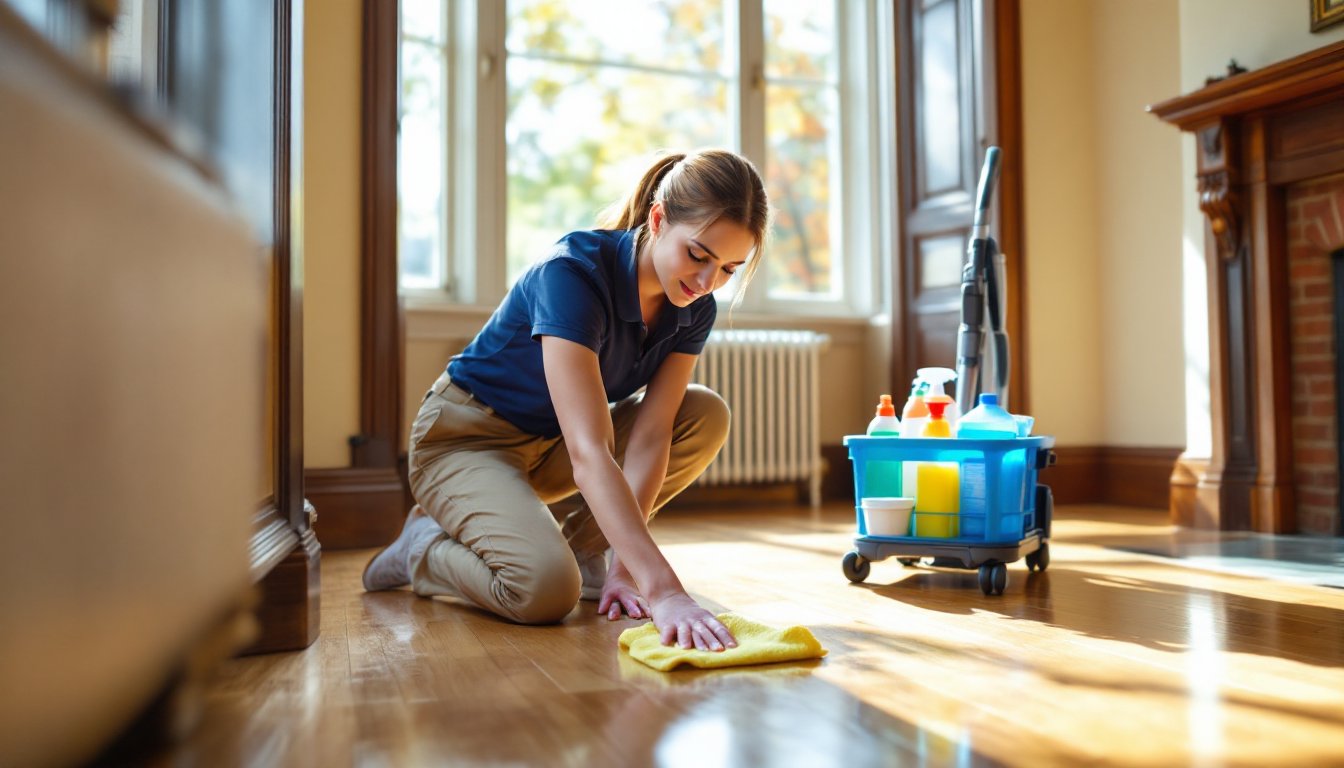
St. Louis homes face unique cleaning challenges that homeowners in drier climates don’t deal with. Between Mississippi River humidity, spring pollen that coats every surface, and winter road salt tracked indoors, keeping a house clean here requires more than a quick vacuum and wipe-down. The region’s clay-heavy soil turns into sticky mud after rain, and the Gateway City’s mix of historic architecture and newer builds means cleaning strategies can’t be one-size-fits-all. This guide breaks down practical cleaning tactics tailored to St. Louis conditions, room-by-room priorities that deliver visible results, and honest advice on when DIY methods hit their limits and it’s time to call in professionals.
Table of Contents
ToggleKey Takeaways
- St. Louis house cleaning requires strategic approaches to combat humidity, spring pollen, and winter salt deposits that are unique to the region’s climate and environment.
- Use HEPA-filtered vacuums, upgrade HVAC filters to MERV 8 or higher during pollen season, maintain indoor humidity between 30-50%, and wash bedding in 130°F hot water to eliminate dust mites and allergens.
- Address winter salt stains immediately with a 1:2 white vinegar-to-water solution, and place dual entry mats at every exterior door to prevent moisture and grit from damaging hardwood floors and carpets.
- Basements require regular floor drain maintenance every quarter and foundation wall inspections for efflorescence, especially given St. Louis’s proximity to the Mississippi and Missouri Rivers and associated flood risk.
- Professional house cleaning services in St. Louis typically cost $120-$250 for standard cleanings or $250-$400+ for deep cleans, making biweekly professional service ($3,900 annually) or a hybrid approach with quarterly deep cleans a practical option for most homeowners.
- Historic homes in neighborhoods like Soulard and Lafayette Square need gentler cleaning methods on original hardwood, plaster, and aged tile to prevent irreversible damage from harsh products or techniques.
Why St. Louis Homes Need a Strategic Cleaning Approach
St. Louis sits in a humid continental climate zone, which means summer humidity regularly tops 70%. That moisture doesn’t just make the air feel heavy, it creates ideal conditions for mold, mildew, and dust mites. Older homes with less effective vapor barriers are particularly vulnerable. Basements in the metro area often show signs of efflorescence (that white, powdery residue on concrete) because groundwater wicks through foundation walls.
Pollen counts here spike hard in spring. Oak, maple, and cottonwood trees blanket cars, decks, and window sills with a yellow-green film that works its way indoors through HVAC systems and open windows. According to expert cleaning advice, pollen allergens can persist indoors for months if not addressed with proper filtration and surface cleaning.
Winter brings its own mess. Road crews use a mix of salt and cinders on streets, and that grit gets tracked into entryways, grinding into flooring and carpet fibers. Homes near major routes like I-64 or Highway 40 deal with even heavier deposits. The freeze-thaw cycle also means muddy conditions persist longer than in colder, drier regions.
Historic homes, common in neighborhoods like Soulard, Lafayette Square, and the Central West End, have hardwood floors, plaster walls, and trim that require gentler cleaning methods than modern synthetic materials. Using the wrong products on original woodwork or aged tile can cause irreversible damage. Strategic cleaning means matching products and techniques to both the home’s age and St. Louis’s environmental stressors.
DIY House Cleaning Tips for St. Louis Homeowners
Tackling Seasonal Challenges: Humidity, Pollen, and Allergens
Spring and summer demand aggressive humidity control. Run dehumidifiers in basements and keep indoor relative humidity between 30-50%. Above 60%, mold growth accelerates. Empty dehumidifier reservoirs daily or route the drain hose to a floor drain or sump. HVAC filters should be MERV 8 or higher, replace them every 30-60 days during pollen season, not the standard 90 days. Cheaper fiberglass filters won’t capture pollen particles smaller than 10 microns.
For hard surfaces, use a damp microfiber cloth rather than dry dusting. Dry methods just redistribute pollen into the air. Wipe down window sills, baseboards, and ceiling fan blades weekly during peak allergy months (April through June). Vacuum with a HEPA-filtered vacuum, bagless models without sealed systems blow fine particles back into the room.
Wash bedding in hot water (130°F minimum) to kill dust mites. Cold or warm cycles don’t reach the thermal kill point. If you’ve got area rugs, take them outside and beat them over a railing, vacuuming alone doesn’t dislodge embedded pollen.
Fall and winter shift focus to entryways. Place heavy-duty mats both outside and inside every exterior door. The outside mat scrapes off bulk mud and salt: the inside mat absorbs moisture. Look for mats with rubber backing and polypropylene fibers, they’re machine washable and dry quickly.
Salt stains on hardwood or tile need immediate attention. Mix 1 part white vinegar to 2 parts water and mop affected areas. Salt is hygroscopic (it pulls moisture from the air), which can warp wood floors if left too long. For carpets, blot salt residue with the same vinegar solution, then extract with a wet-dry vacuum. Don’t let it sit until spring.
Room-by-Room Cleaning Priorities for Maximum Impact
Kitchen: Grease buildup accelerates in humid weather. Degrease range hoods and backsplash tile monthly with a mix of dish soap and baking soda, commercial degreasers work faster but ventilate well: fumes concentrate in tight spaces. Check under the sink for mold around plumbing penetrations. If you spot black or green growth, scrub with a solution of 1 cup bleach per gallon of water. Wear nitrile gloves and safety goggles: bleach splashes cause chemical burns.
Bathrooms: Mildew loves St. Louis bathrooms. Run the exhaust fan during showers and for 20 minutes after. If your fan moves less than 50 CFM (cubic feet per minute), it’s undersized for moisture removal, check the label on the unit. Grout lines darken from mold: scrub with a stiff nylon brush and a paste of baking soda and hydrogen peroxide. For stubborn stains, a steam cleaner works without chemicals, but don’t use it on antique tile, thermal shock can crack glazing.
Living areas and bedrooms: Vacuum high-traffic zones twice weekly, less-used rooms weekly. Use the crevice tool along baseboards where dust and pet hair collect. For homes with pets, a rubber squeegee pulled across upholstery lifts embedded fur better than most vacuum attachments.
Wash walls annually, starting at the top and working down. Use TSP (trisodium phosphate) substitute, straight TSP is hard to find post-2010 due to phosphate regulations. Mix per label directions and wear gloves: it’s alkaline and dries out skin. Rinse thoroughly or you’ll have a sticky residue.
Basements: Clean floor drains by pouring a gallon of water down them quarterly. The trap can dry out and let sewer gas seep in. If you smell sulfur or rotten eggs, that’s hydrogen sulfide, the trap needs refilling. Inspect foundation walls for efflorescence: scrub it off with a stiff brush and apply a concrete sealer if the problem recurs. Check sump pump operation before spring rains, dump a bucket of water in the basin to verify it kicks on.
When to Hire Professional House Cleaning Services in St. Louis
Some cleaning tasks exceed the reasonable scope of DIY work, either because they’re time-intensive, require specialized equipment, or involve health risks.
Deep cleaning after water damage or flooding should be handled by professionals with commercial dehumidifiers, air movers, and moisture meters. St. Louis’s location near the Missouri and Mississippi Rivers means flood risk is real. Drywall and insulation that stay wet for more than 48 hours almost always develop mold. Professionals can document moisture levels for insurance claims.
Hoarder or estate cleanouts involve biohazard risks, rodent droppings, decomposed food, and potential sharps. Professional services have the PPE, disposal protocols, and licensing to handle Category 2 and 3 contamination (gray water and black water).
Post-renovation cleaning is another candidate for pros. Construction dust contains silica, drywall particulates, and sometimes lead (in pre-1978 homes). Standard vacuums aren’t rated for fine construction dust, you need HEPA filtration and proper disposal. Many comprehensive home improvement guides note that post-construction cleaning often takes longer than homeowners anticipate.
Move-in/move-out cleaning is worth outsourcing if you’re on a tight timeline. Professionals can knock out an empty 1,500-square-foot home in 4-6 hours with a crew. Doing it solo often stretches across multiple days.
When vetting St. Louis cleaning services, ask:
- Are they bonded and insured? Damage to property or worker injury becomes your liability without coverage.
- Do they bring their own supplies and equipment, or do you provide them? Pricing models vary.
- What’s their service frequency? One-time deep cleans cost more per visit than recurring weekly or biweekly contracts.
- Do they background-check employees? You’re giving strangers access to your home.
Pricing in the St. Louis metro generally ranges from $120-$250 for a standard cleaning of a 1,500-2,000 square-foot home, depending on service level and neighborhood. Deep cleans (including inside appliances, baseboards, and detail work) run $250-$400+. Rates in Clayton, Ladue, and other West County areas skew higher than North County or South City.
For homeowners doing the math, hiring a service biweekly (26 times per year at $150 per visit) costs $3,900 annually. That’s less than $325 per month, often worth it for busy households or anyone with mobility limitations.
A hybrid approach works for many: DIY maintenance cleaning (vacuuming, dishes, surface wipes) with quarterly professional deep cleans for grout, baseboards, and hard-to-reach areas. This keeps costs manageable while preventing the buildup that turns into a weekend-long project.
Conclusion
St. Louis homes demand more than generic cleaning routines. Humidity, pollen, and seasonal grit mean homeowners here need targeted strategies, HEPA filtration during allergy season, dehumidifiers year-round, and aggressive entryway management in winter. Most cleaning tasks are manageable with the right products and consistency, but recognizing when a job requires professional equipment or expertise saves time, money, and potential health risks. Whether tackling it solo or hiring help, the key is matching the method to the mess.