
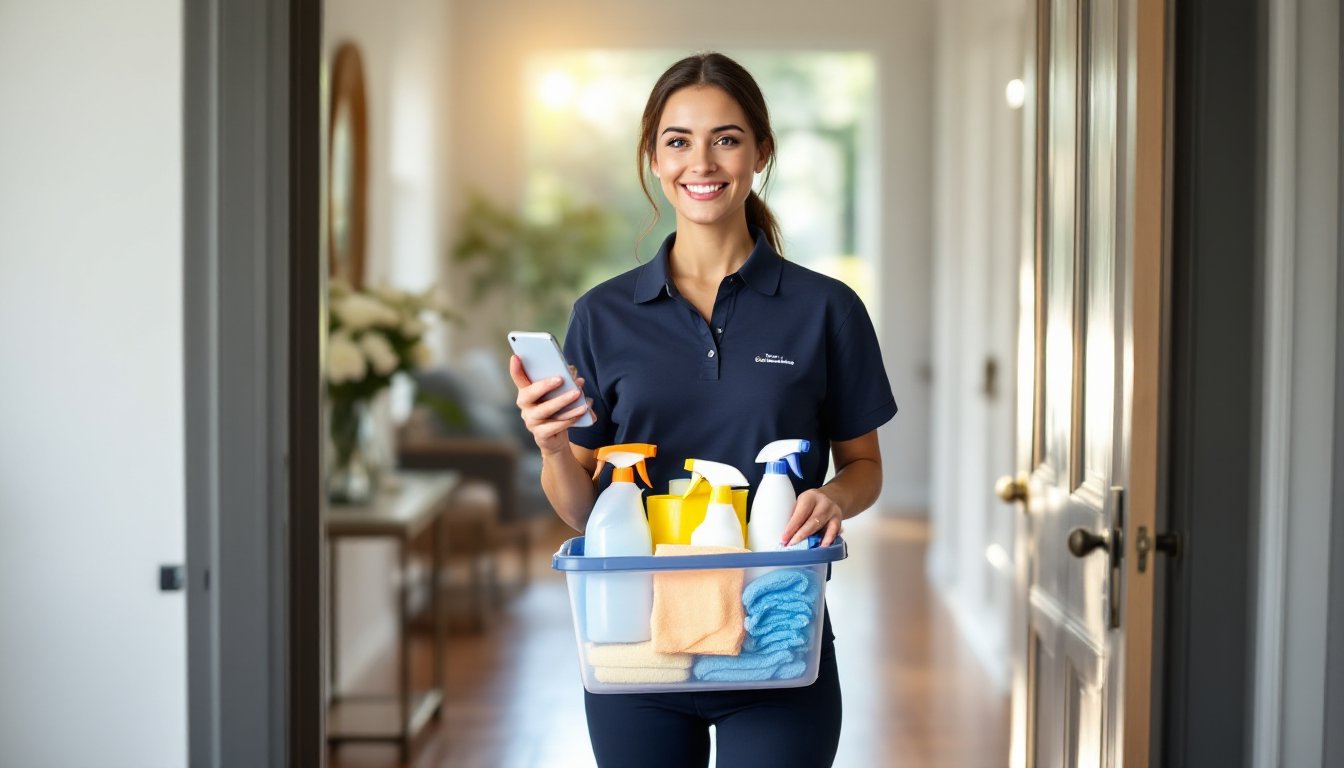
Starting a house cleaning business isn’t about perfecting a Pinterest-worthy aesthetic, it’s about building a real service operation with paying clients and reliable systems. The barriers to entry are low, the startup costs manageable, and the demand steady. Whether you’re looking to replace a 9-to-5 income or build a side hustle with growth potential, cleaning businesses offer flexibility and scalability few other ventures can match. This guide walks through the practical steps to start your own house cleaning business, from legal setup to landing your first paying customers.
Table of Contents
ToggleKey Takeaways
- Starting a house cleaning business requires minimal startup costs ($200–$1,000) and no specialized certifications, making it an accessible entry point for aspiring entrepreneurs.
- Register your business as an LLC or sole proprietorship, obtain an EIN, and secure general liability insurance ($400–$600/year) to protect yourself legally and meet client requirements.
- Price your services competitively using flat rates rather than hourly rates—a 3-bedroom, 2-bath home typically costs $150–$250—and avoid underpricing to attract quality clients instead of bargain hunters.
- Build your first client base through personal networks, local Facebook groups, Nextdoor, and discounted first-time offers, then ask satisfied customers for Google reviews to accelerate growth.
- Focus on consistency, create a standard operating procedure for each cleaning type, and invest in recurring weekly or bi-weekly clients to maximize lifetime revenue.
- Track your profit margins (aim for 30–40% net profit), decide when to hire employees or subcontractors for scaling, and prioritize client retention and quality over chasing industry trends.
Why Starting a House Cleaning Business Makes Sense Right Now
The residential cleaning industry continues to grow as more dual-income households outsource time-intensive chores. Unlike many service businesses, house cleaning doesn’t require expensive certifications, specialized training, or commercial real estate. The overhead stays lean, most cleaners operate from home and schedule clients using a smartphone.
Startup costs typically range from $200 to $1,000 for basic supplies, insurance, and initial marketing. That’s far less than most franchise fees or retail ventures. You can test the model with just a handful of clients before committing to full-time hours.
Another advantage: you control your schedule. Many cleaning business owners work three to four days per week and gross $40,000 to $60,000 annually as solo operators. Add employees or subcontractors, and revenue scales accordingly. The business model rewards consistency and quality over complicated sales funnels or inventory management.
Essential Steps to Launch Your Cleaning Business
Choose Your Business Structure and Register Legally
Most new cleaning businesses start as a sole proprietorship or limited liability company (LLC). A sole proprietorship is simpler and costs less upfront, but an LLC offers personal liability protection if a client claims property damage or injury. Filing an LLC typically costs $50 to $200 depending on your state, plus annual renewal fees.
Register your business name with your county or state clerk’s office. If you’re operating under a name other than your own, say, “Sparkle Home Services” instead of “Jane Doe Cleaning”, you’ll need a DBA (Doing Business As) registration. This allows you to open a business bank account and accept checks made out to your business name.
Obtain an Employer Identification Number (EIN) from the IRS, even if you’re a solo operator. It’s free, takes minutes online, and keeps your Social Security number off client invoices. You’ll need it to hire employees later or file certain tax forms.
Get the Right Insurance and Licensing
General liability insurance is non-negotiable. It covers accidental damage to a client’s property, think a broken lamp or scratched hardwood floor. Policies typically start around $400 to $600 per year for $1 million in coverage. Many clients, especially commercial accounts, won’t hire you without proof of insurance.
If you plan to hire employees, you’ll also need workers’ compensation insurance. Requirements vary by state, but most jurisdictions mandate it once you have even one W-2 employee. Sole proprietors working alone usually don’t need it.
Licensing requirements depend on your location. Some cities or counties require a general business license or home occupation permit. Check with your local municipal office, many post licensing guides for home service providers online. Don’t assume you can skip this step: operating without required permits can result in fines or force you to shut down.
Equipment, Supplies, and Startup Costs You’ll Need
You don’t need a cargo van full of equipment to start. Many successful cleaners begin by using clients’ vacuums and mops, bringing only their own microfiber cloths, all-purpose cleaner, glass cleaner, and disinfectant. This keeps your initial investment under $100.
Once you have steady clients, invest in professional-grade supplies. A quality backpack vacuum (around $300 to $500) reduces fatigue and speeds up jobs. Stock up on:
- Microfiber cloths (at least two dozen, color-code them for kitchens, bathrooms, and general surfaces)
- All-purpose cleaner, glass cleaner, and bathroom disinfectant (buy concentrate to save money)
- Mop and bucket or spray mop system
- Scrub brushes, sponges, and squeegees
- Extension pole for ceiling fans and high surfaces
- Caddy or tote to carry supplies between rooms
Skip the gimmicky gadgets. A good HEPA-filter vacuum and reliable cleaning solutions will outperform specialty tools in most residential settings.
Budget for personal protective equipment (PPE): nitrile gloves, knee pads if you scrub floors often, and safety goggles if you’re using heavy-duty degreasers or oven cleaners. Proper ventilation matters, never mix bleach with ammonia-based products.
Marketing costs can stay minimal. A simple website (around $15/month for hosting and a template) and business cards (under $50 for 500) cover the basics. Many new cleaning businesses rely on word-of-mouth, local Facebook groups, and neighborhood apps like Nextdoor rather than paid ads.
Setting Your Prices and Finding Your First Clients
Pricing models vary. Some cleaners charge hourly rates ($25 to $50 per hour depending on region and experience), while others use flat-rate pricing based on square footage or number of bedrooms and bathrooms. Flat rates are easier for clients to budget and help you avoid losing money on jobs that take longer than expected.
A typical starting rate for a standard clean might be:
- 1-bedroom, 1-bath apartment: $80 to $120
- 3-bedroom, 2-bath home: $150 to $250
- Deep clean or move-in/move-out service: add 50% to 100% to the base rate
Research what local home service businesses charge in your area. Don’t underprice to win clients, you’ll attract bargain hunters who don’t value your work. Instead, compete on reliability and thoroughness.
To land your first clients, start with your immediate network. Let friends, family, and coworkers know you’re launching a cleaning business. Offer a new-client discount (10% to 15% off the first clean) to generate referrals.
Join local community groups on Facebook and Nextdoor. Post a brief introduction with your services, pricing, and contact info. Many homeowners prefer hiring someone local with personal recommendations over anonymous online services.
Consider signing up for platforms like Thumbtack, TaskRabbit, or Care.com to fill your schedule while you build direct referrals. These platforms take a cut (usually 15% to 25%), but they provide a steady stream of leads without upfront ad spend.
Ask satisfied clients for Google reviews. A handful of five-star reviews can turn casual searchers into paying customers faster than any ad campaign.
Growing Your Business and Building a Strong Reputation
Consistency beats perfection when you’re starting out. Show up on time, follow a cleaning checklist for every job, and communicate clearly. Clients value reliability more than spotless grout, though spotless grout helps, too.
Create a simple standard operating procedure (SOP) for each type of clean. For example, always start in the same room, work top to bottom, and finish with floors. This keeps you efficient and ensures you don’t skip tasks when you’re tired.
As demand grows, decide whether to stay solo or hire help. Solo operators keep more profit per job and avoid payroll taxes, but they cap their income at what one person can clean in a week. Hiring employees or subcontractors lets you scale revenue, but it adds complexity, payroll, training, scheduling, and quality control.
If you hire, vet candidates carefully. Run background checks (many cleaning product reviews and service platforms recommend this). Train new hires on your SOP and shadow them for at least the first three jobs. Pay fairly, underpaying leads to high turnover, which costs more in the long run.
Invest in client retention. A weekly or bi-weekly recurring client is worth far more than one-time deep cleans. Offer a small discount for recurring service (5% to 10% off) to encourage regular bookings. Send appointment reminders via text or email the day before to reduce no-shows.
Track your numbers. Know your cost per job (supplies, labor, drive time) and your profit margin. Most cleaning businesses aim for a 30% to 40% net profit margin after all expenses. If your margin is lower, adjust your pricing or reduce inefficiencies.
Keep learning. The cleaning industry evolves, new products, eco-friendly trends, and client expectations shift. Stay current without chasing every fad. A reputation for thorough, dependable work will always outperform the trendiest Instagram-worthy cleaning hack.